From soil to success: WVU Parkersburg’s F2S Agrication program cultivates more than just crops
Parkersburg, W.Va. (September 5, 2025) — Welcome to Agrication, WVU Parkersburg’s hands-on farm-to-school program that’s planting the seeds of agricultural knowledge — and paying students to get their hands dirty while they learn.
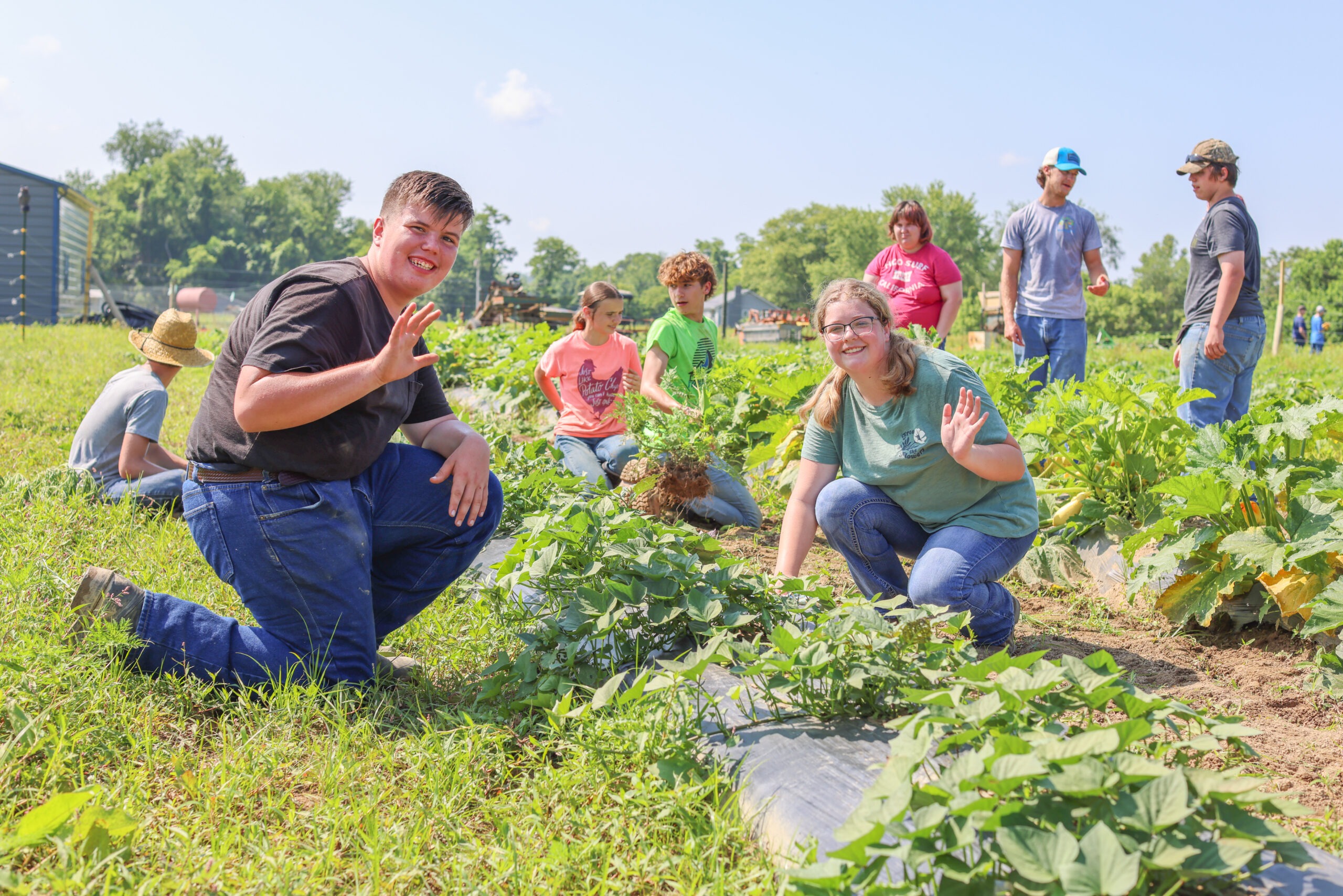
Bees buzz in the distance, the scent of fresh soil perfumes the air, and a group of students giggle as they pull weeds and potatoes from the ground. It may sound like summer camp, but this is a classroom.
Agrication is WVU Parkersburg’s answer to the age-old student question: “When will I ever use this?” With hands in the dirt and boots in the field, students explore science, sustainability, nutrition, and even business while learning.
Offered to students in grades nine through 12, the Farm to School (F2S) Agrication program introduces teens to the wide world of agriculture: from soil science and sustainability to animal care, food systems, and farm management. The twist? Students are paid for their work.
“What really sets Agrication apart is that it blends hands-on workforce training, real-world farm operations, and personal development,” said Jesse Jameson, Agrication Coordinator. “Students aren’t just exposed to agriculture — they’re gaining industry-relevant experience that prepares them for future careers while also building responsibility, teamwork, and problem-solving skills.”
Through two-week summer rotations, students spend time on the Riverhawk Farm — working, learning, and growing in every sense of the word. Teens can earn up to $650 for completing their session while learning skills rarely offered in similar youth ag programs in the Mid-Ohio Valley.
“We do a little bit of lecture in the classroom, but mostly it’s hands-on work out in the fields,” said Shaley Hughes, program coordinator. “We try to start with the cattle in the morning — brushing, feeding — then hit the garden early before the heat sets in. After lunch, it’s whatever needs doing.”
“It’s a full day,” she added. “They’re learning to drive tractors, use equipment, care for crops and work with animals.”
With West Virginia ranking among the highest in the nation for food security, the hands-on work students do at the Riverhawk Farm takes on a deeper meaning. Sure, they’re pulling weeds and harvesting vegetables, but they’re also learning about nutrition, sustainability, and the power of food to support a healthier community. From identifying helpful pests to removing diseased leaves and preparing produce for use or donation, every task ties back to the bigger picture of food security.
“Riverhawk Farm and the Agrication program don’t just teach farming — they grow food, grow people, and grow community resilience,” Jameson said. “By producing fresh, local food, training the next generation of agricultural leaders, and supporting schools and families, we’re directly addressing food security challenges in the Mid-Ohio Valley.”
“Before we went outside today, we talked about which insects help the garden and which ones hurt it,” Hughes said. “Then they went out and saw it firsthand — that kind of learning sticks.”
Freshman Rae Strother agrees.
“I came here with no experience, but Shaley and Jesse have taught me so much. Everyone here has. It’s really hands-on — and more fun than I expected.”
For many, it’s their first job. For others, it’s the first time they’ve considered farming as a future. And for a few, it’s just a great excuse to be outside and off their phones.
“I really like agriculture — and the money wasn’t a discouragement at all,” said freshman Aaron Russell. “I think I’d like to be a park ranger. That would be kind of fun.”
“I want to be a nurse, because I love people and want to help them get better,” Strother added. “But this program made me think about agriculture as a real option, too.”
From squash and sweet potatoes to heirloom tomatoes and green beans, the Riverhawk Farm is a living lab of diversity. Students help grow dozens of crops — including purple tomatoes, spaghetti squash, cucumbers, carrots, and even pumpkins — while learning how seasons, pests, and weather affect every harvest. Riverhawk Farm is a mission in action. The food grown here supports the campus and the local community, helping advance sustainability and health initiatives.
Student-harvested produce supports the Pharmacy Program, a WVU Extension initiative that provides 30 local residents with $25 worth of fresh vegetables each week — along with recipes, samples, and nutrition guidance.
“Yesterday alone, we harvested several hundred pounds,” said Hughes. “It’s rewarding to know our work feeds people.”
The program’s farm-to-school approach is deeply connected with local county schools, FFA and 4-H chapters, and works closely with the WV Department of Education and WVU Extension Agents to link fresh produce to school meals and community mock farmers markets — blending education, health and local supply chains.
The Agrication program has that rare magic: it’s educational, meaningful, and honestly, kind of fun. There’s something about watching a student pull a carrot from a garden they’ve helped care for — a mix of pride, surprise, and maybe a little dirt under the fingernails — that says it all.
“We were just out the first day, absolutely sinking in the mud picking squashes and zucchinis,” said Russell. “I was throwing them across the mud pit to put into baskets — that was probably the funnest thing so far.”
“Same experience as Aaron, but my shoes fell off in the mud,” laughed Strother. “All three of us got stuck, and Shaley had to pull me out.”
“We had to dig their boots out by hand,” Hughes said, laughing. “A couple of them needed new socks and pants, but they just rolled with it.”
Not everything is work. The farm’s unofficial mascot, Ferdinand the bull, is a favorite among the students.
“He just stands there while they pet him like a dog,” Hughes said. “He loves the attention.”
The Agrication program aims to grow more than crops. Students finish their rotation with practical, transferable skills — from driving tractors to fencing, livestock care, and produce sorting — that they take back to family farms or use in local ag businesses. Some students have already used what they learned to boost their own family’s farm operations or start small side projects.
In the next few years, WVU Parkersburg hopes to expand the program to reach more students year-round, introduce participants to its A.A.S. in Agribusiness degree, and develop new certifications in value-added production, culinary agriculture, and ag technology.
“Our dream is to see Agrication become a regional model for experiential agricultural education,” Jameson said. “We want to expand student access, strengthen career pathways, and increase our community impact, all while preparing youth for the future of agriculture through innovative and sustainable practices.”
The long-term vision? To see Riverhawk Farm produce as a regular part of campus dining, local markets, and area schools — strengthening the Mid-Ohio Valley’s local food systems and health.
“F2S Agrication is an exceptional program that immerses students in real-world agricultural production, maintenance, and operational scaling. We are deeply grateful for the continued support from our community and all those who have contributed to the program’s success. The participants have been outstanding, and we take great pride in the growth and knowledge each student has demonstrated over their two-week experience. We remain committed to enhancing the program each year and look forward to expanding these valuable opportunities for students across the Mid-Ohio Valley,” said John Riggs, Agriculture Director at WVU Parkersburg.
“What excites me most about leading this program is seeing growth everywhere — in the soil, in the students, and in our community,” Jameson added. “Watching students come in with little experience and leave with confidence and pride in their work is incredibly rewarding. At the same time, knowing that the food we grow is feeding local families makes every effort meaningful.”
With muddy boots, big smiles, and fresh vegetables on local tables, these students are sowing the seeds that will keep growing for years to come.